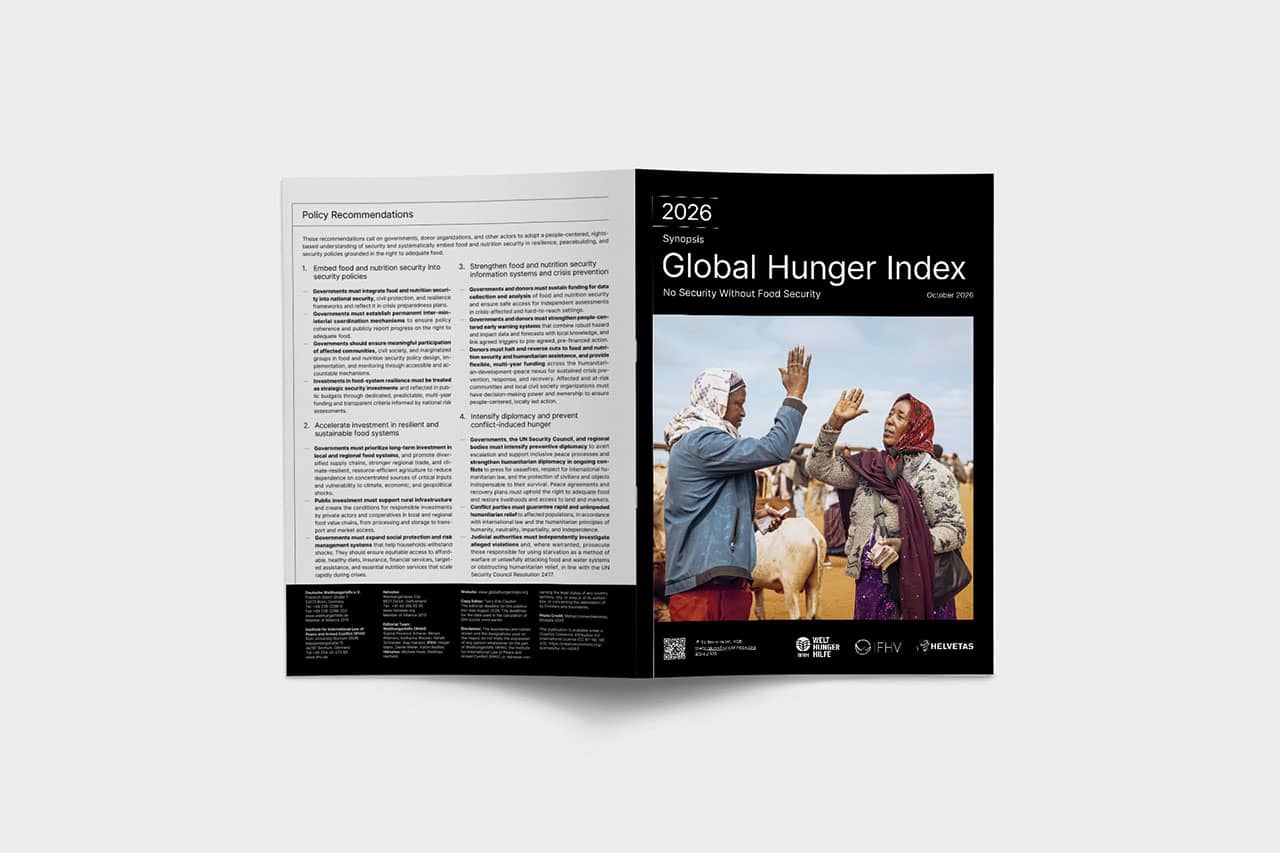
Global hunger has worsened amid multiple crises.
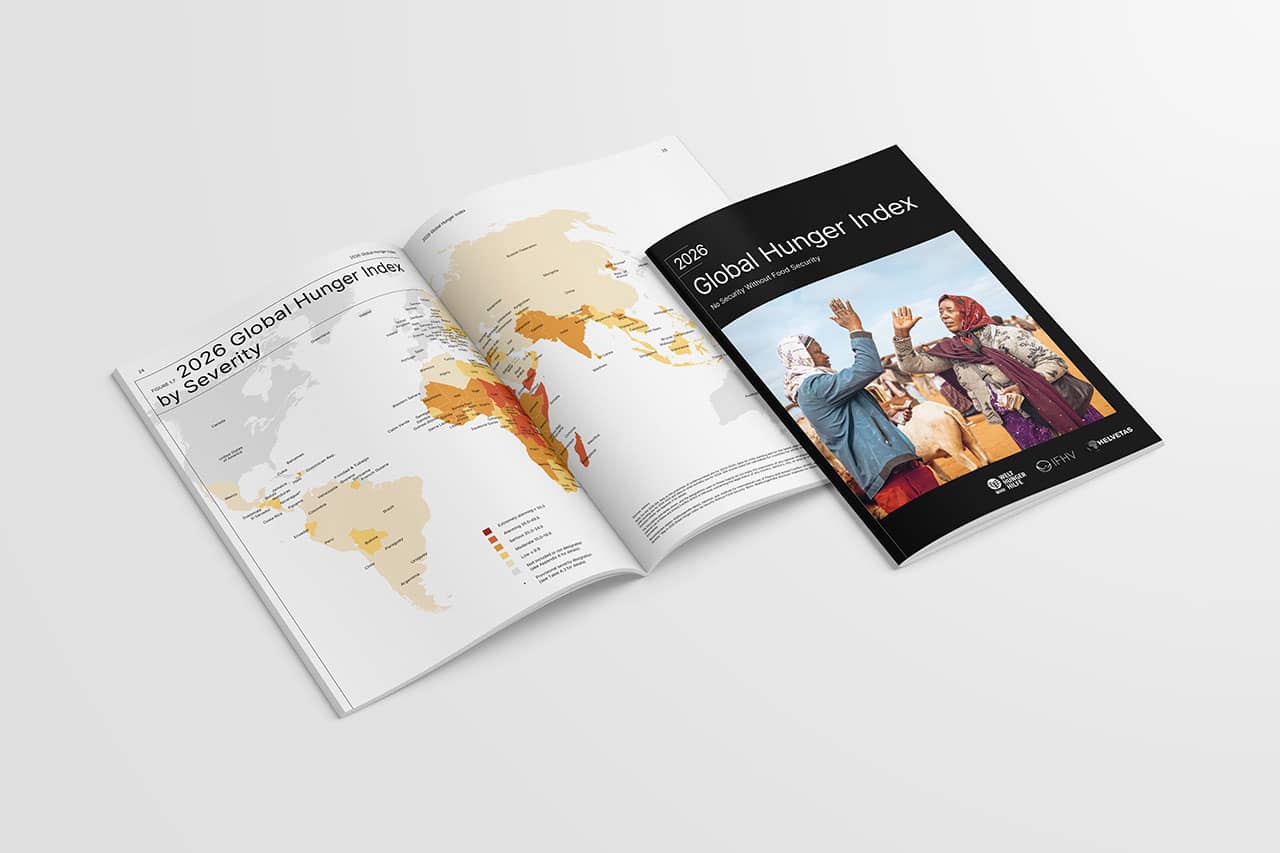
The 2026 global GHI score of 18.1 (moderate) is higher than in 2018, interrupting the decline since 2000. Based on 2021–2025 data, it reflects a period of overlapping conflicts, climate extremes, and economic shocks. New geopolitical shocks, trade disruptions, and an intensifying El Niño threaten to further strain food and nutrition security, particularly in countries facing protracted crises.
Progress has become more fragile across regions.
Hunger remains serious in Africa South of the Sahara and South Asia. Compared with 2018, GHI scores rose in Africa South of the Sahara and West Asia and North Africa, remained unchanged in Europe and Central Asia, and fell by less than one point in Latin America and the Caribbean and East and Southeast Asia.
Conflict can drive hunger and undernutrition for decades and far beyond conflict zones.
Chronic, high-intensity conflict is linked to decades of lost progress against hunger. The Russia–Ukraine war has disrupted global food and fertilizer markets and has contributed to higher food prices globally, affecting food and nutrition security far beyond conflict zones. Shipping disruptions linked to the US–Israel–Iran war now pose similar risks. Food price spikes can have lasting effects on food and nutrition security and lifelong consequences for children’s growth and development.
Food insecurity and insecurity reinforce each other.
Food insecurity is not only a consequence of crises; it can also create conditions that intensify them. The 2026 Global Hunger Index explores how inadequate access to food can deepen vulnerabilities, increase competition over scarce resources, and contribute to instability, further undermining livelihoods and food security.
Food security must be embedded in security policies.
Security policies focusing mainly on military threats can overlook what enables people and societies to withstand crises. The report’s six regional contributions examine the role of resilient food systems, secure livelihoods, social protection, climate adaptation, and access to essential resources such as water in strengthening security. Together, they show why food and nutrition security must be systematically integrated into peace and security policymaking.
Experts from six regions reflect on the relationship between food security and security
Lasting progress against hunger requires sustained action and resilient food systems.
Long-term improvements since 2000 in countries such as Nepal, Sierra Leone, Tajikistan, and Uganda show that substantial progress is possible. Lasting gains rarely result from a single intervention but reflect coordinated action to strengthen food system resilience, health, nutrition, education, sanitation, and social protection. National averages can still mask subnational disparities, and shocks, including climate extremes, can quickly put hard-won gains at risk.